Art Militant: Night Shift and the Reanimation of Virginia MOCA
What is a community? How is it activated? How do you care for it?
VA MOCA has the answer.
“When Night Shift launched, the idea was intentionally simple: a party in a museum, which has been an approach explored by many institutions nationwide. What became clear almost immediately, however, was that it was operating as something more than an event.” Says Eric Wiggins, co-owner of Thank You Gallery of VA MOCA.
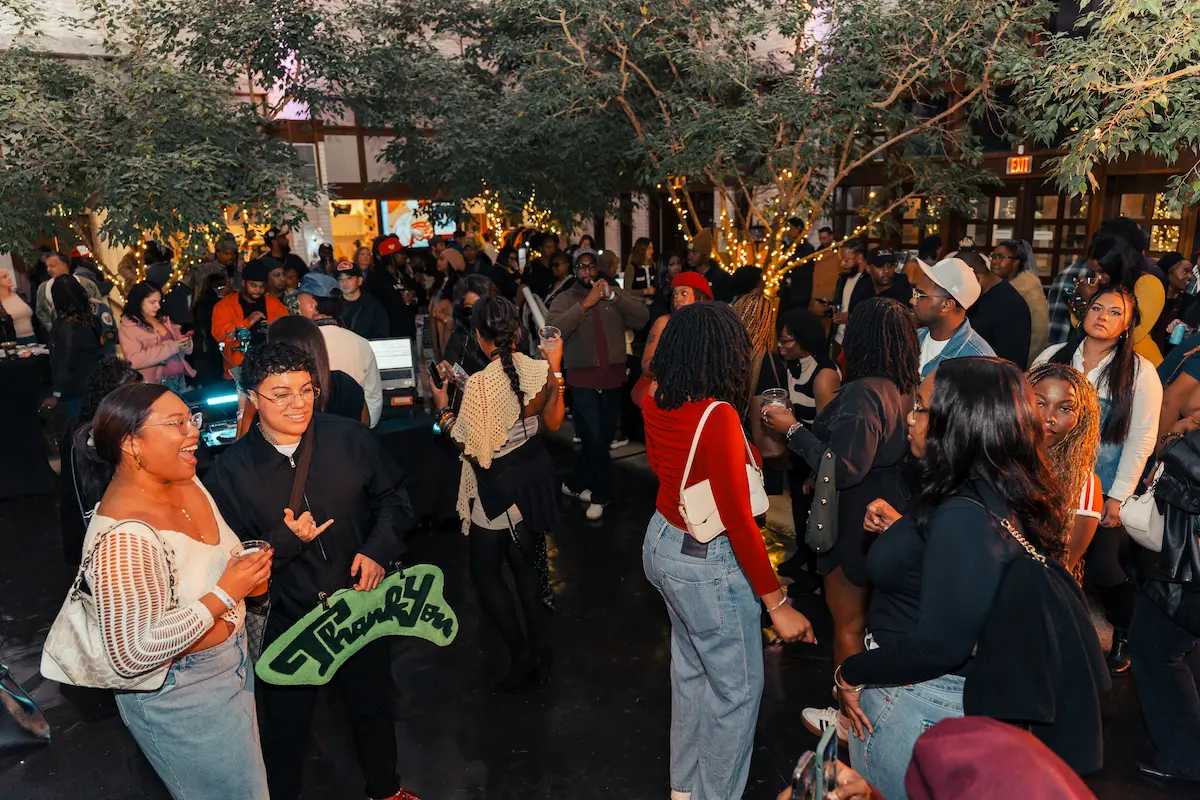
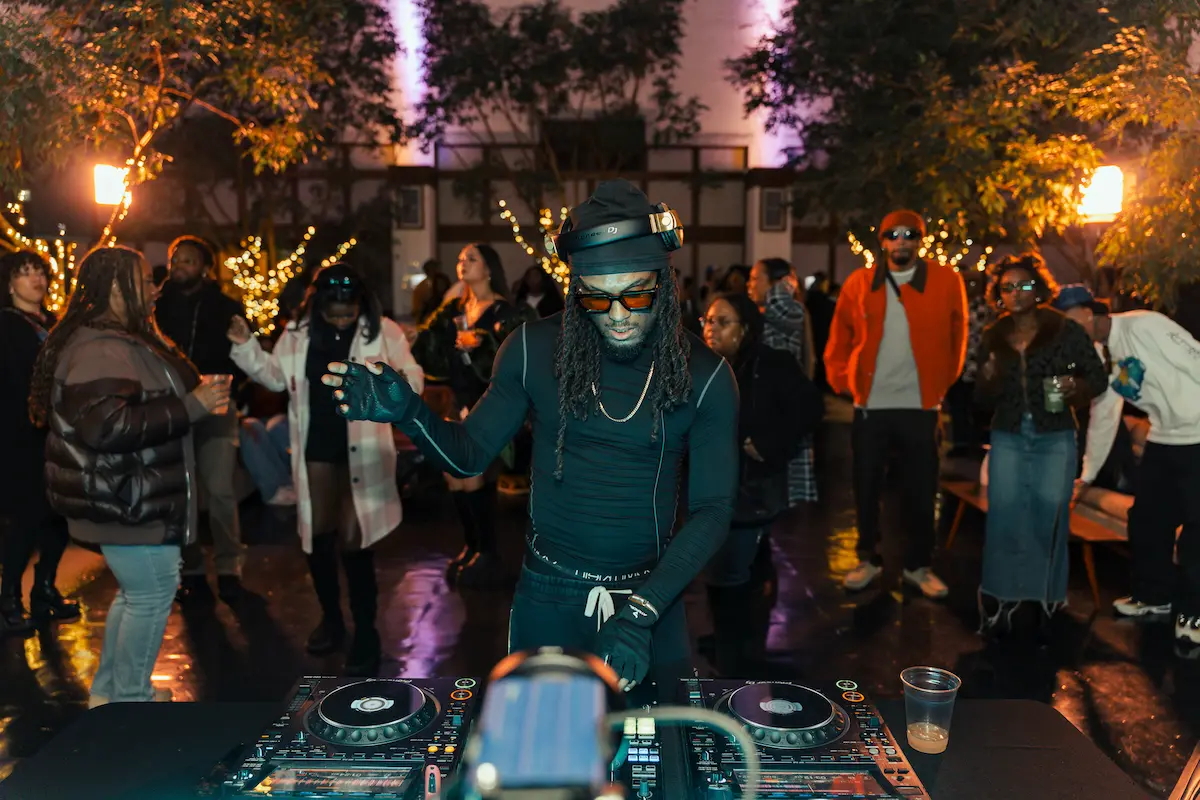
On the evening of Night Shift, the Virginia Museum of Contemporary Art allowed itself to be fully inhabited. A night where a DJ booth occupied the museum’s grand, skylit, central atrium, reorienting a space designed to center visitor circulation from one wing to another into a site of the season’s celebration. There were no prehistoric beings or random stampedes but this Night at the Museum was as interesting as Shawn Levy’s fantastical adventure. Bass moved through the concrete and glass. Bodies gathered where they typically would casually pass through. The galleries remained active, engaged, and very much so populated throughout. The social energy surely didn't eclipse the art but redirected more attention toward it as the night went along.
Organized by Thank You Gallery and regional creative collective, Social Supply, Night Shift offered a community model worth examining. The event foregrounded participation without ever abandoning exhibition interpretation. Visitors and members moved fluidly between sound, conversation, and sustained encounters with exhibitions, workshops and local area vendors all at the perimeters of the venue. Fascinically, the museum did not suspend its curatorial responsibility to the actual art; it tested how that responsibility might function under alternative social conditions.
Wiggins continues
“Night Shift demonstrated that cultural relevance isn’t achieved through simplification, but through responsiveness in simply trusting audiences, honoring institutional integrity, and allowing the museum to function as a living civic space.”
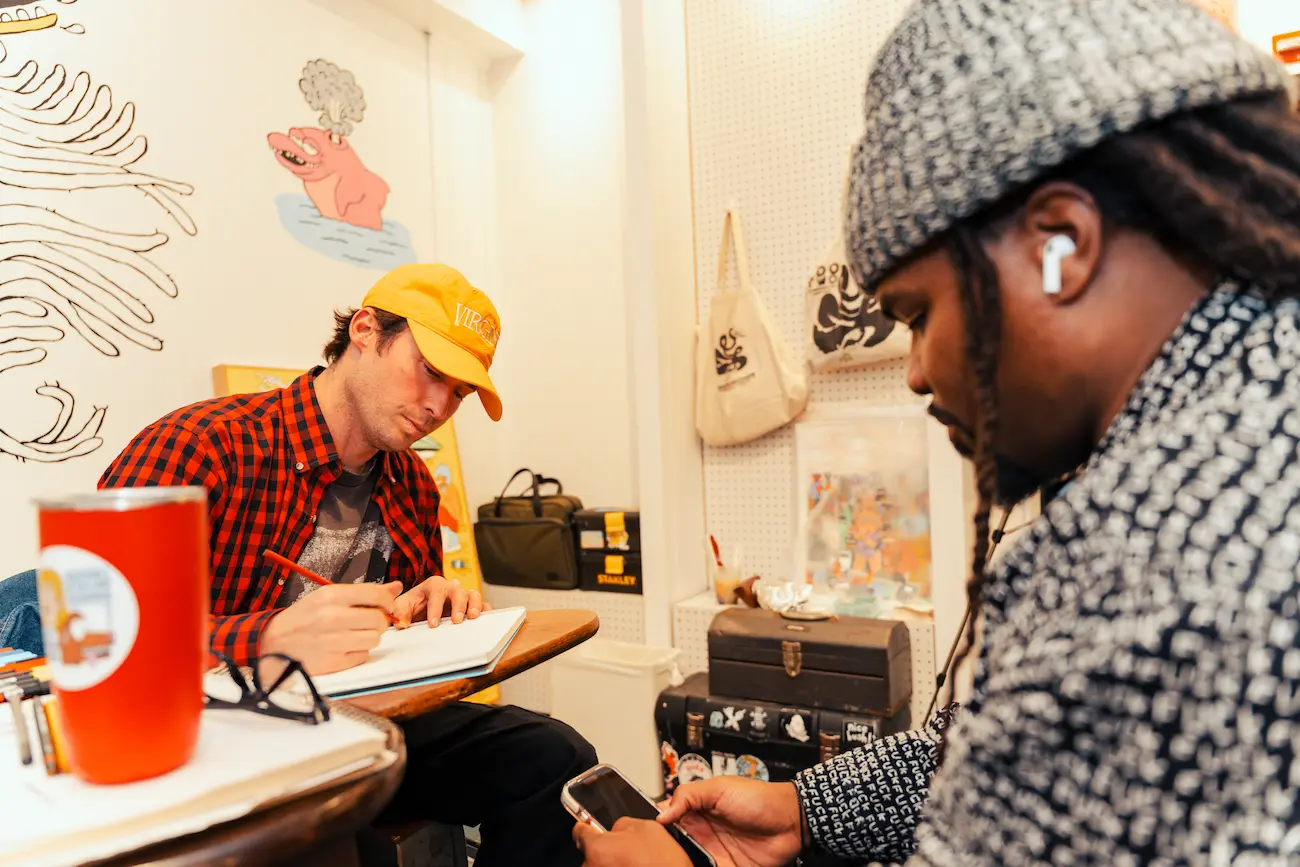
This distinction matters. Contemporary museums are often stuck between relevance and scholarly discipline, hesitant to court eager younger audiences or as Wiggins expressed “audiences labeled as hard to reach” for fear of compromising authority. Virginia MOCA’s mission as a prominent community focused museum in the nation sharply suggests that this fear can be misplaced. Rather than treating community engagement as an auxiliary function (like so many do - such as Brooklyn Museum’s Artist Ball) MOCA positions it as an amplifier. A tool that extends the exhibition experience.
Fashion brands and food vendors lined the atrium as a chance to display their merch, many selling out as the night progressed. You could witness economic exchange unfold alongside cultural engagement – a beautiful symphony. Among the vendors was NAMI Nori, local restaurant known for its minimalist approach to Japanese hand rolls. Their presence marks a moment for attention. Nami at a museum party underscores how taste, just like art, operates through companionship and care. Food creates pause and that anchored visitors in the space long enough for deeper engagement to occur all over. The museum’s full ecosystem of art, sound, commerce felt intentionally interdependent.
The success of Night Shift invites a broader institutional question: what does it mean for a museum to allow itself to be used? Cultural theorist Shannon Jackson stated in “Public (Re)Assembly” her concept of institutions as entries of assembly, capability and a platform to support complex social arrangement and access. Virginia MOCA appeared willing to absorb this energy without retreating from curatorial commitment.
“By taking an institutional risk that was productive rather than performative, we introduced a familiar entertainment structure that younger audiences felt comfortable within, while remaining grounded in the museum’s core mission, including exhibitions, education, and local creative practice. The museum wasn’t diluted; its values were activated through new forms of participation. What set Night Shift apart wasn’t simply the presence of a younger demographic, but the depth of their engagement. This was not youth as branding, instead it was youth as an active participant, with attendees moving through galleries, engaging with programming, and treating the museum as a space worth occupying.”
If museums are concerned about aging audiences and diminishing cultural authority, Virginia MOCA offers a persuasive counterexample of the ultimate solution. Growth adjacent to youth culture does not require abandoning seriousness. It demands curiosity about who the museum is for, how it can be used, and what forms of engagement it has yet to allow.
By the end of the night, the atrium felt electric. More importantly, the galleries did too. Night Shift suggests that institutional vitality is not a matter of spectacle, but of trust: trust in the work, in the audience, and in the possibility that relevance emerges when museums listen closely to the communities already at their doors.
Eric continues, “Night Shift created a meeting point between younger audiences who don’t always feel museums are meant for them and institutions that value their participation but have historically struggled to engage them in meaningful ways.”
The bar has been set. The challenge is clear – not to replicate this event, but for institutions to own their voice within their own communities, and to risk being changed by it.