Gaining ground globally, Bahamian art also has a vibrant local scene - It turns out paradise has a history too
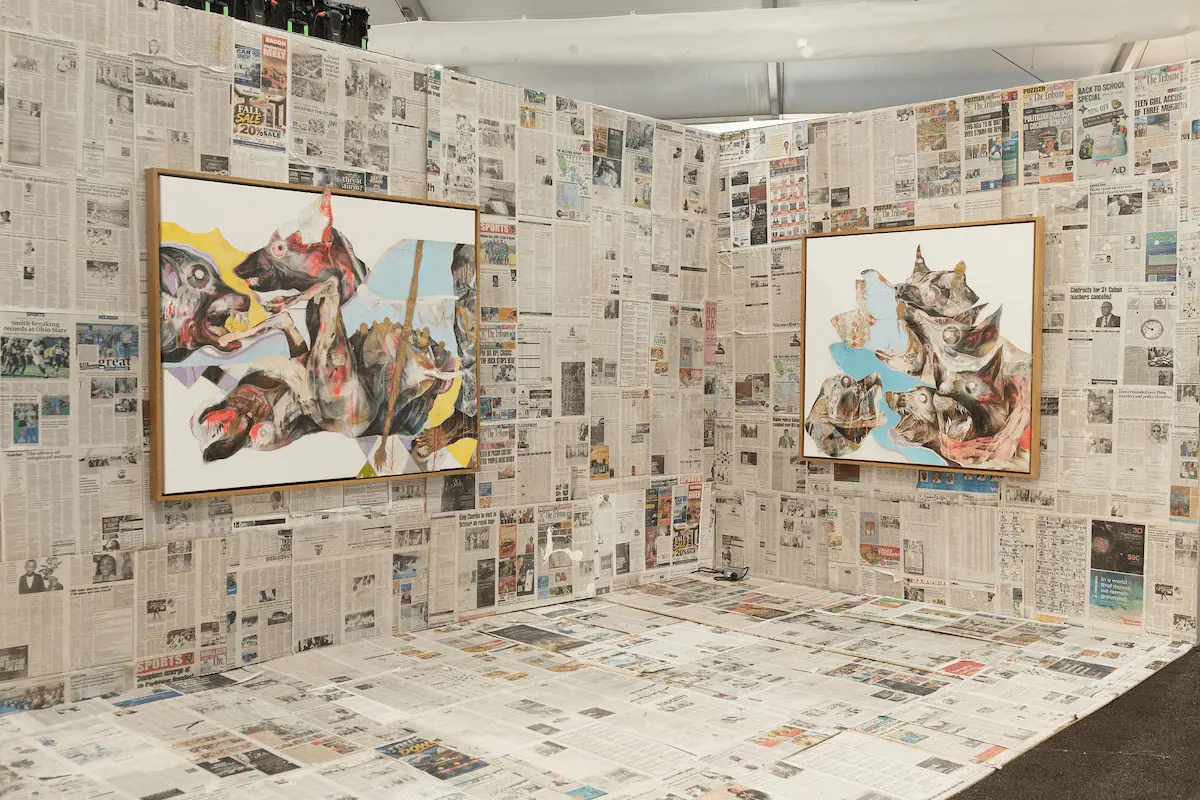
Lavar Munroe booth at FUZE 2026
The Bahamian art scene proves you don't need a big sky to hold a universe of stars. When The Bahamas had its first presentation at the Venice Biennale in 2013 with Tavares Strachan – arguably its best-known artist – the Bahamians present in Italy had a mantra: “there’s more where that came from.” They weren’t wrong. Bahamian artists including Janine Antoni, April Bey, Anina Major, Lavar Munroe and Gio Swaby have since risen to prominence, with acquisitions and exhibitions, particularly from US museums, coming in thick and fast. This is significant given the country’s population of only around 400,000 and, while it carries the image of a paradise, it’s also a post-colonial nation just over 50 years old grappling with questions of identity, confidence and equality.
I’m currently in Nassau, the country’s capital, for the fourth edition of FUZE Caribbean Art Fair, running October 21–25. The last and only comparable time I felt energy this palpable in an emerging art market, and such an abundance of undiscovered talent, was when I was traveling to Ghana in the 2010s. The Bahamas and Ghana are interconnected on many levels both historically and today. They have a reciprocal visa waiver agreement and pursue policies that seek climate, tax and reparatory justice as part of a reimagined global community. Bilateral diplomacy aside, one can’t help but also draw parallels between the trajectory of their art scenes. Like Ghana’s, The Bahamas’ has received limited public funding and has been artist-led. In fact, one of the panels at FUZE is specifically about building institutions while sustaining a studio practice.
Few artists have done more to build platforms here than FUZE’s creative director John Cox. Cox spent a decade on the faculty of what is now the University of The Bahamas, before joining the National Art Gallery of The Bahamas (NAGB). Alongside this work, he founded Popopstudios, a pivotal grassroots artist co-op operating from 1999 to 2018 that significantly shifted the direction of the country’s contemporary art. Cox is now vice president of arts and culture at Baha Mar, a multi-billion-dollar resort in Nassau that pursues a cultural placemaking strategy with a collection of 2,500 works, alongside The Current art center, the gallery Eccho and the fair FUZE.
FUZE’s theme this edition is Coming Home. Cox says: “It considers home not only as a physical place, but as an emotional and cultural space shaped by memory, community and shared experience.” Cultural leaders in The Bahamas have long had to fight against a brain drain as artists and professionals left to pursue their careers abroad. A new generation is now choosing to remain. This is made possible not just by the growing global cachet of Bahamian art, but also by the rise of institutions, galleries and platforms like FUZE which cultivate a local market whilst achieving recognition abroad. As art market columnist Melanie Gerlis said in The Art Newspaper this year: “history shows most of today’s thriving art markets started out with a flourishing of local culture. Shifts to deepen national and local markets are already underway.”
Amanda Coulson, a Bahamian with four decades of art world experience and a co-founder of VOLTA art fairs, notes: “When the NAGB opened in 2003 it was a crucial turning point. It allowed career artists to push boundaries and the process of exhibition-making in new ways within a museum context.” It was the NAGB that later brought Coulson back home from abroad in 2011 when she became its director, a role she held for a decade before founding the commercial gallery TERN in 2020 alongside Lauren Perez. TERN has also been a gamechanger for the region, creating pathways for international exchange that didn’t exist before. The gallery is presenting six artists at FUZE and has participated in more than 20 fairs globally. This year it will be the first Bahamian gallery to participate in Art Basel Miami Beach, where it will present Anina Major alongside her solo exhibition at Pérez Art Museum Miami.
Eddion Whyms’ career exemplifies how an artist can be nurtured within this interconnected community, most notably by the Central Bank of The Bahamas, which has supported culture for over 50 years. Whyms’ work won a Central Bank open-call competition and was acquired for its prestigious collection of over 600 Bahamian works. He was mentored by artist Antonius Roberts at the Incubator for Creative Expression (I.C.E.), an organization Roberts founded to mentor emerging artists, in a residency program underwritten by the bank. Also supported by the Central Bank, Whyms later joined Lavar Munroe to work on the installation of The Bahamas Pavilion at the 2026 Venice Biennale, curated by Dr Krista Thompson, a scholar instrumental in developing critical discourse for Bahamian art and a speaker at FUZE. Now Whyms’ work is being shown at FUZE, where Toronto-based Armova has also shown his work in Canada. Ulrich Voges, curator of Central Bank, says: “Whyms’ career is another Bahamian success story. For us, collecting is only one part of the responsibility. We also must create opportunities for artists to develop, experiment and be seen, including eventually beyond The Bahamas. His progression demonstrates why investing in Bahamian creative talent is also an investment in the country’s creative economy.”
In Nassau, I see the gigantic cruise ships on the coastline and hear reflections on the negative side of tourism, which accounts for 70% of the country’s GDP. At FUZE, Blue Curry has transformed a booth into a tongue-in-cheek tourist shop stocked with merch and wallpapered with the slogan Over Tourism, turning clichés of Caribbean tourism back on itself. Coulson says: “The phrase operates on more than one level. For those who live in islands shaped by tourism, we are quite literally over it.” It’s evident the country has more to offer than sand, sea and sun, but it’s hard to ignore the raw beauty of its environment. It’s easy to see why even Bahamian artists who have lived abroad for decades continually return to the islands and draw heavily on their rich history, culture and landscape in their work. Jodi Minnis-Rolle, curatorial director of NAGB, says: “Because Bahamian culture is so rich and multi-layered, it often becomes clearer to us the further away from it we are. The distance gives us a tool for articulation but also gives us an opportunity to be opaque as people coming out of a tourist economy.” Minnis-Rolle herself is another example of homegrown talent who has risen through the ranks as both an artist and curator over the past decade – from being a recipient of the Popopstudios Junior Residency prize, to working as a curator for Central Bank and then TERN before taking on a leadership role at NAGB.
What is increasingly apparent is the relationship between the international success of Bahamian artists and the infrastructure being built at home. The NAGB, I.C.E., TERN, Central Bank, The Current and FUZE represent different models of support, but collectively they create something previously in short supply: an ecosystem through which artists can develop, exhibit, mentor, sell and connect internationally without necessarily having to move away from The Bahamas. That may be the most significant change taking place yet.
This tight-knit community has already accomplished much together and built a network of relationships and shared experiences rarely seen in today’s fast-paced world. It’s not surprising that interest in Bahamian art has never been stronger.
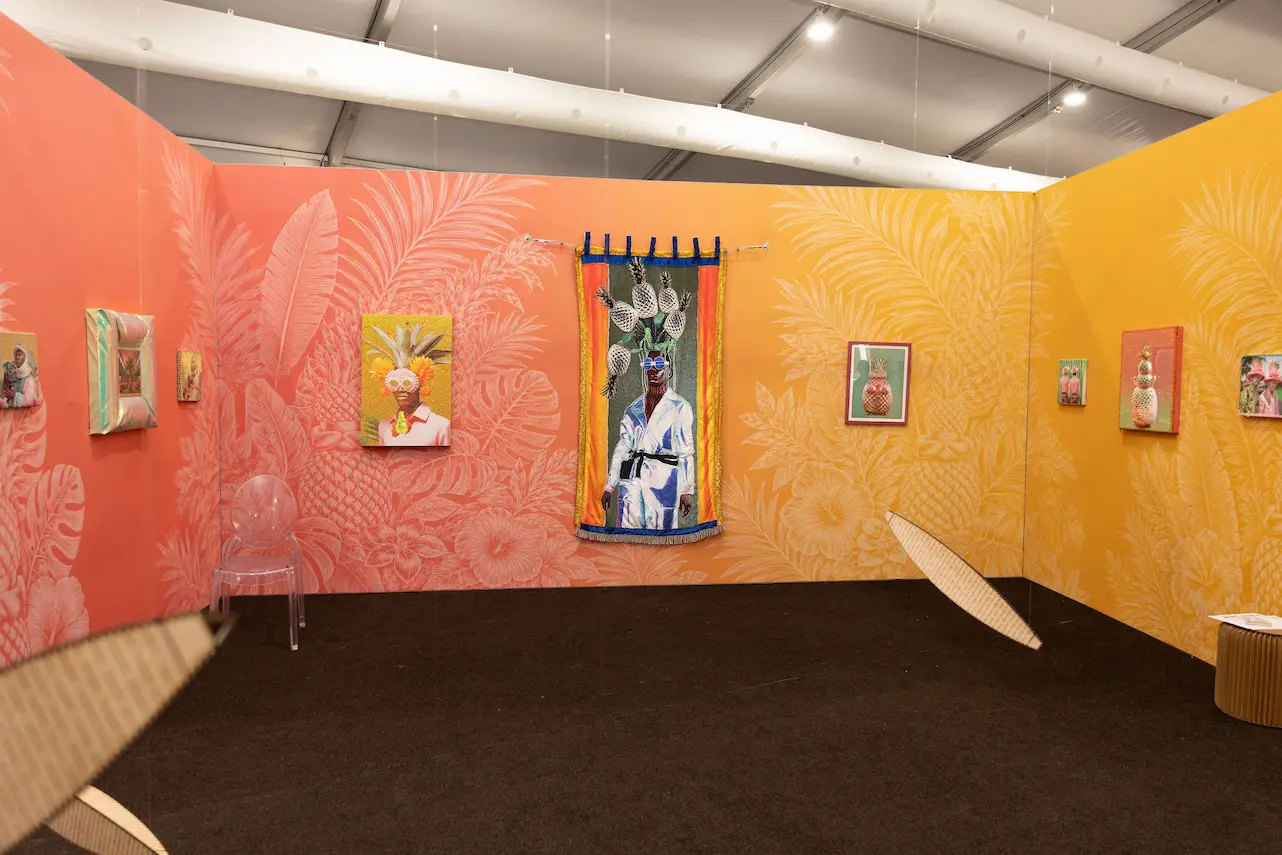 April Bey presented by TERN at FUZE 2026