
Community, Care, and Bad Bunny: A conversation with Bahamas Pavilion’s Curator Dr. Krista Thompson
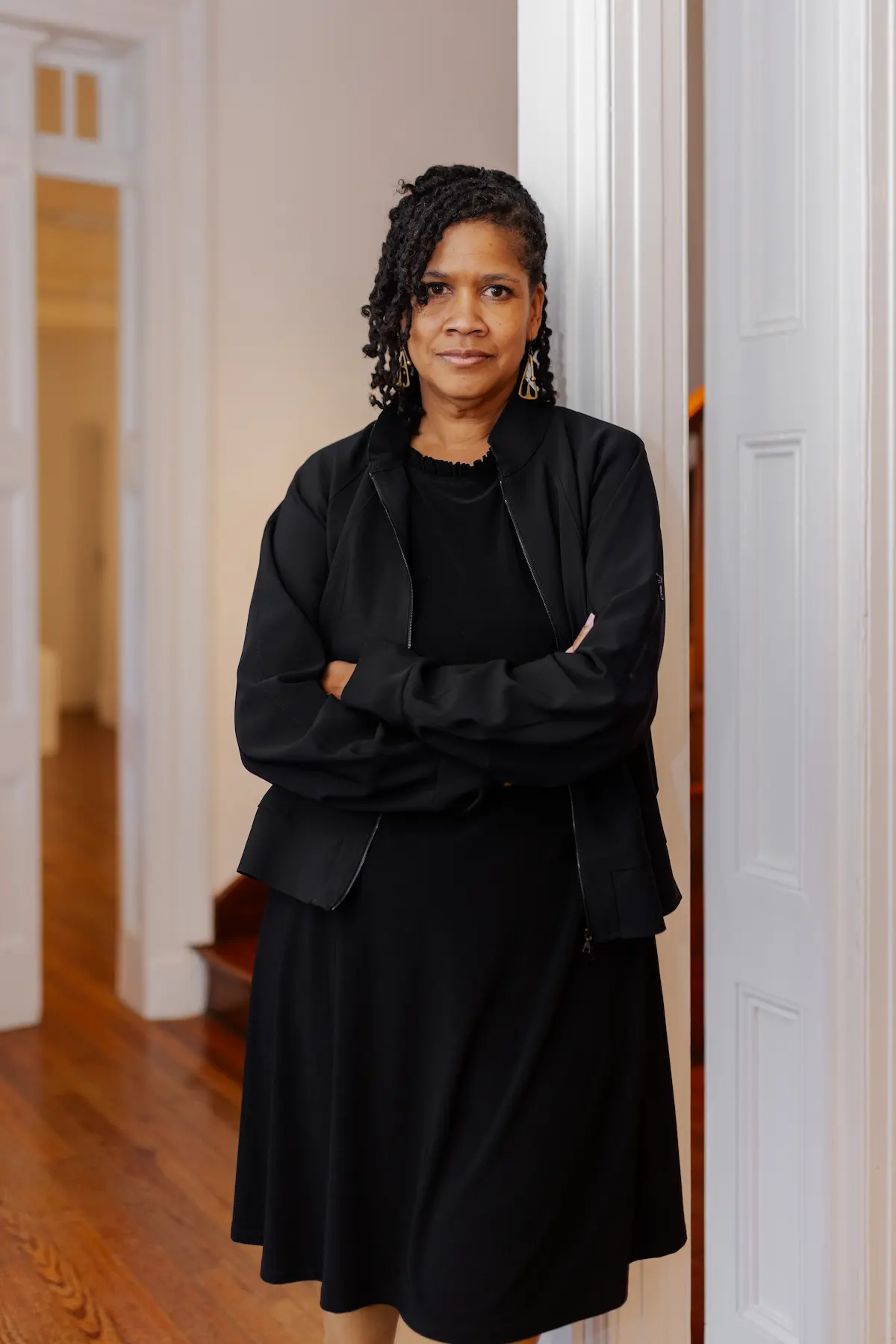
Dr. Krista Thompson. Photo by Blair Meadows.
The Bahamas Pavilion’s Curator Dr. Krista Thompson sat with our contributing writer Marguerite Wynter to preview what we can expect from the country’s return to the Venice Biennale Pavilion in over a decade.
They discuss shared memories across the Caribbean diaspora; how returning to familiar practices can spark feelings of community, care, and connection; and the ways Caribbean artists have long been responding to urgent social and political issues. Plus, a moment of shared cultural touchpoints around Bad Bunny.
Marking only the second presentation of The Bahamas at La Biennale di Venezia following a 13-year hiatus, this year’s Pavilion brings together the work of two Bahamian artists: the late John Beadle (1964–2024) and Lavar Munroe (b. 1982). Grounded in the visual and social traditions of The Bahamas and the wider African diaspora, their practices engage deeply with collaboration, commemoration, and material transformation. Their intergenerational dialogue forms both the conceptual and visual foundation of the Pavilion, positioning artistic lineage as a living, evolving exchange.
This conversation has been edited for brevity.
Marguerite Wynter: When you were first approached about this pavilion, what vision began to take shape for you?
Krista Thompson: I’m originally from the Bahamas, and although I’ve been teaching art history and Caribbean art in the U.S. for nearly 20 years, my research and curatorial work have remained deeply connected to Bahamian art. I’ve curated several exhibitions at the National Art Gallery of the Bahamas, and much of my writing focuses on visual representation within that context. There’s a Bahamian expression about your “navel string” being buried where you’re born — the idea that you’re always connected to that place and called back to it. This pavilion felt like an opportunity to return to those roots and bring Bahamian artistic narratives into a global conversation.
MW: I’m smiling because my father’s family is from Antigua and I wonder if there is a similar expression.
KT: Once your navel string was buried, you always felt connected, and you always felt the need to return to place. And, yeah, so my navel string…Laughing.
MW: With your deep connections to place, why did you choose John Beadle and Lavar Munroe to be in conversation with one another?
KT: When I was first approached, I immediately thought of John Beadle. Nearly ten years ago, he was supposed to represent the Bahamas at the Venice Biennale, but the project fell through due to funding. He passed away a little over a year ago, and the community is still mourning him, so this felt like an important opportunity to honor both his legacy and the opportunity he never received.
John’s practice also connected multiple generations of Bahamian artists — from independence-era figures to younger collectives — and he was deeply embedded in the Junkanoo maker community. I wanted a second artist whose work could speak to that history while extending it forward, which is why Lavar Munroe felt so fitting. Lavar is from a younger generation but was mentored by John, and both artists work with cardboard and other discarded materials to think about value, visibility, and who or what society overlooks. Their works create a strong visual and conceptual dialogue across generations.
MW: Can you expand on Junkanoo and how it’s represented in the exhibition?
KT: Junkanoo is a long-standing Caribbean masquerade tradition, with roots going back centuries. In the Bahamas, it has remained especially vibrant. Groups spend months creating elaborate costumes together, often working collectively in shared spaces called shacks. The process is collaborative, people building, painting, shaping, and decorating at the same time, which creates a sense of urgency and shared authorship.
That collaborative spirit is central to the exhibition. Both artists are shaped by Junkanoo traditions, not only visually through materials like cardboard, but also through the communal nature of making. Visitors will see how those traditions translate into contemporary artistic practice.
MW: Community and collective care are central themes, especially when you reference Junkanoo, and the multiple makers that are working on the same costume together at the same time. How does that collaboration show up in the exhibition?
KT: Those ideas are deeply embedded in Junkanoo and in the artists’ practices. The act of transforming discarded materials into something beautiful is inherently communal — people come together and form a kind of chosen family through making.
John, in particular, carried that ethos into contemporary art through collaborative groups that created works collectively over decades. The exhibition includes works that reflect those collaborative methods, emphasizing that art-making itself can be a shared social process. Visitors will experience not just individual artworks but a broader sense of artistic community and collective creation.
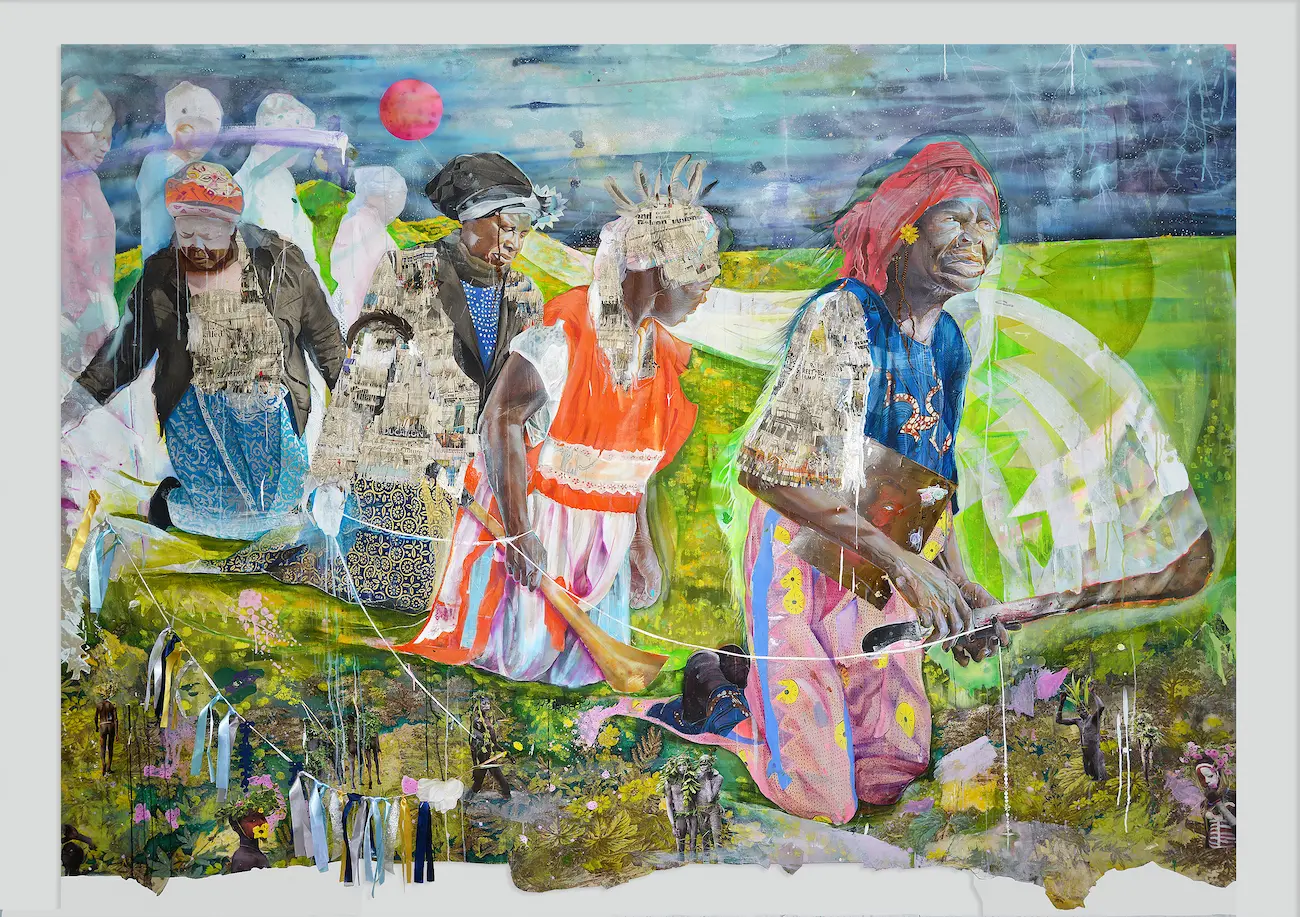
Lavar Munroe, Lift Up Mine Eyes, Unto the Hills, 2024, Acrylic, Latex house paint, airbrush, oil pastels, printed and painted fabric, feathers, ribbon. staples tacks, fringed newspaper and found photos on canvas. Courtesy the artist.
MW: The Bahamas having a pavilion again after nearly a decade is significant for this community.
KT: It’s hugely meaningful. Being represented on a stage like the Venice Biennale positions Bahamian artists within global contemporary art conversations. It also feels especially significant because of John’s history — this is an opportunity that should have happened for him earlier, so the pavilion carries a strong sense of commemoration.
There’s also a memorial dimension. One of the final works in the pavilion is a large multi-panel painting by Lavar that references a Junkanoo procession honoring John. It draws on photographs documenting memorial celebrations in the Bahamas, making the exhibition both a national presentation and a collective act of remembrance.
MW: What do you hope visitors without familiarity with Bahamian art will take away after leaving the pavilion?
KT: I hope visitors leave recognizing the excellence and complexity of artists working within our island context. Both artists use cardboard, a material associated with Junkanoo, to think about what society throws away or overlooks, whether objects, spaces, or people.
The work is visually striking, but it also invites reflection on broader social and political themes. My hope is that viewers connect not only to the beauty and precision of the work but also to the questions it raises about value, care, and visibility.
MW: Beyond this pavilion, what excites you about the future of the art being made within the Caribbean diaspora art communities?
KT: Coming off of seeing Bad Bunny perform.
MW: He instantly brought people together.
KT: I just feel like, the Caribbean is just a testament to the ways that so many kind of social issues that are impacting the world are now impacting that that have long impacted the Caribbean are impacting the world, and because our artists have been connected to those processes that they are now center stage because they have been talking about and focusing on issues that the rest of the world is dealing with, right?
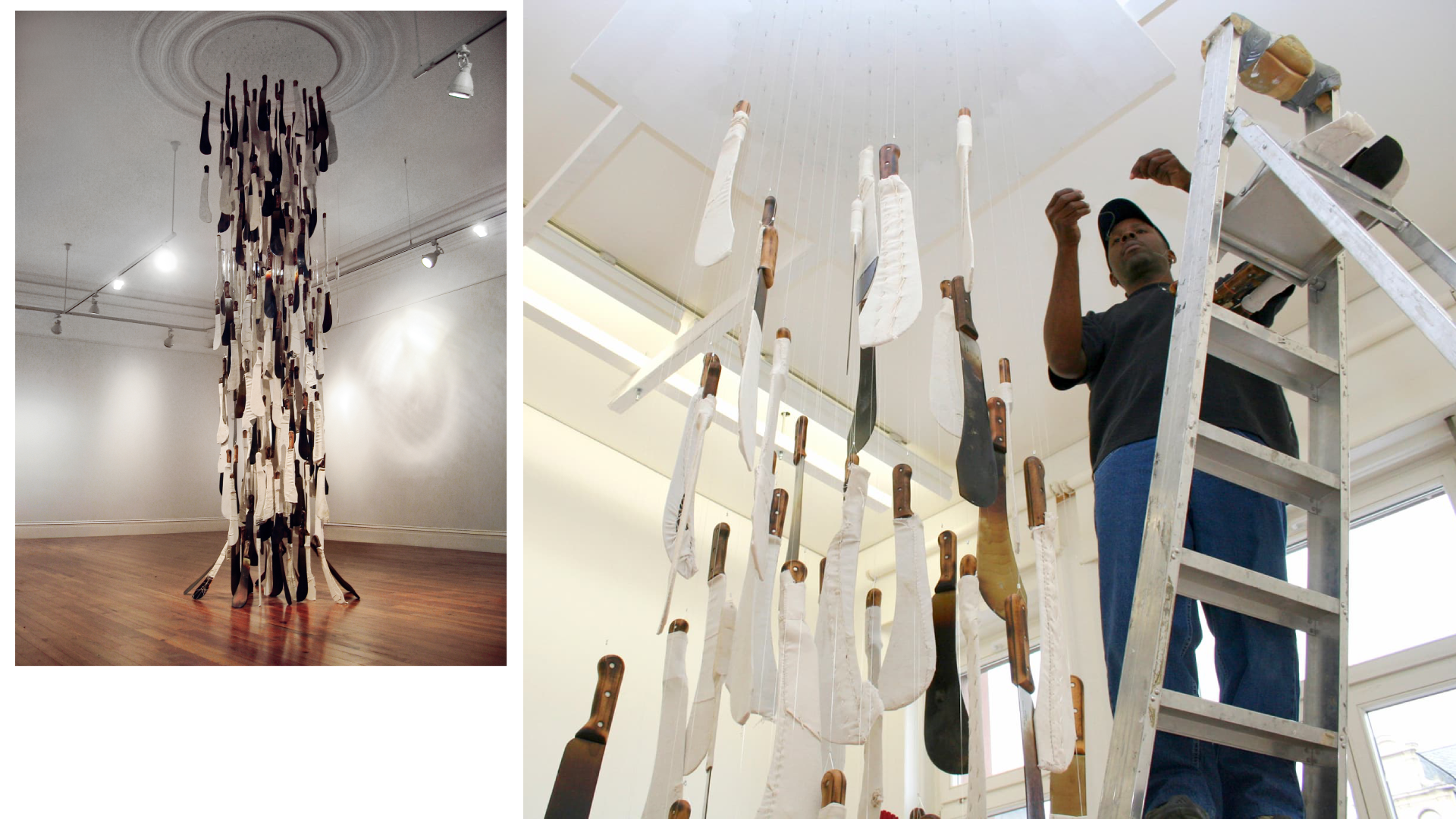
John Beadle, In Another Man's Yard, 2006. Courtesy the artist.
MW: I think about displacement…everytime there is a hurricane I text my family to make sure they are “prepared”, whatever that means. Bad Bunny referenced and symbolized the powerlines during the show.
KT: Yes, Caribbean artists have long been engaging with themes that are now central globally — migration, climate change, fragile infrastructures, and social transformation. Because these realities have shaped the Caribbean experience for so long, artists in the region have developed powerful visual languages around them.
What feels exciting now is that the wider art world is finally paying closer attention. Caribbean artists are gaining visibility not because their work has changed, but because the conversations they’ve been leading are now at the center of global cultural discourse.